
How to Measure Pupil Distance (PD) at Home
At home, how to measure PD comes down to five options: a card with your camera, a ruler in a mirror, a friend, a picture, or your old glasses. Your device never sends the photo anywhere: the camera method works within your browser.
| Method | What you need | Dual PD too |
|---|---|---|
| Card and camera | A phone or laptop camera, plus any bank card you have | Yes |
| Ruler and mirror | A mirror and a ruler marked in millimetres | No |
| With a friend | A helper and a ruler marked in millimetres | Yes |
| Old glasses | A ruler, a washable pen and a pair of glasses that fits you well | No |
| Photo | A bank card plus a person who takes the photo for you | Yes |
1. Find Your PD Online With a Card and Camera
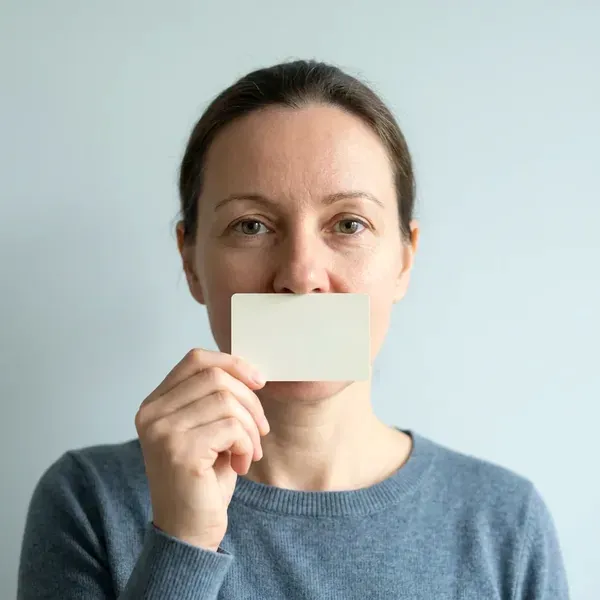
Measuring PD online is quickest this way. Open the measurement and choose "Yes, I have a card". Place any bank card so its length lies sideways and its top edge rests just below your nose, keeping the card flat against your face. Keep the phone at arm's length and level with your eyes, then take one photo.
After that, tap the centre of each pupil and both ends of the card. Since a card follows the ID-1 standard and is 85.60 mm wide, the tool can convert pixels into millimetres. Take a second photo: if two results differ by no more than 1 mm, that is a good sign.
2. Using a Ruler and a Mirror
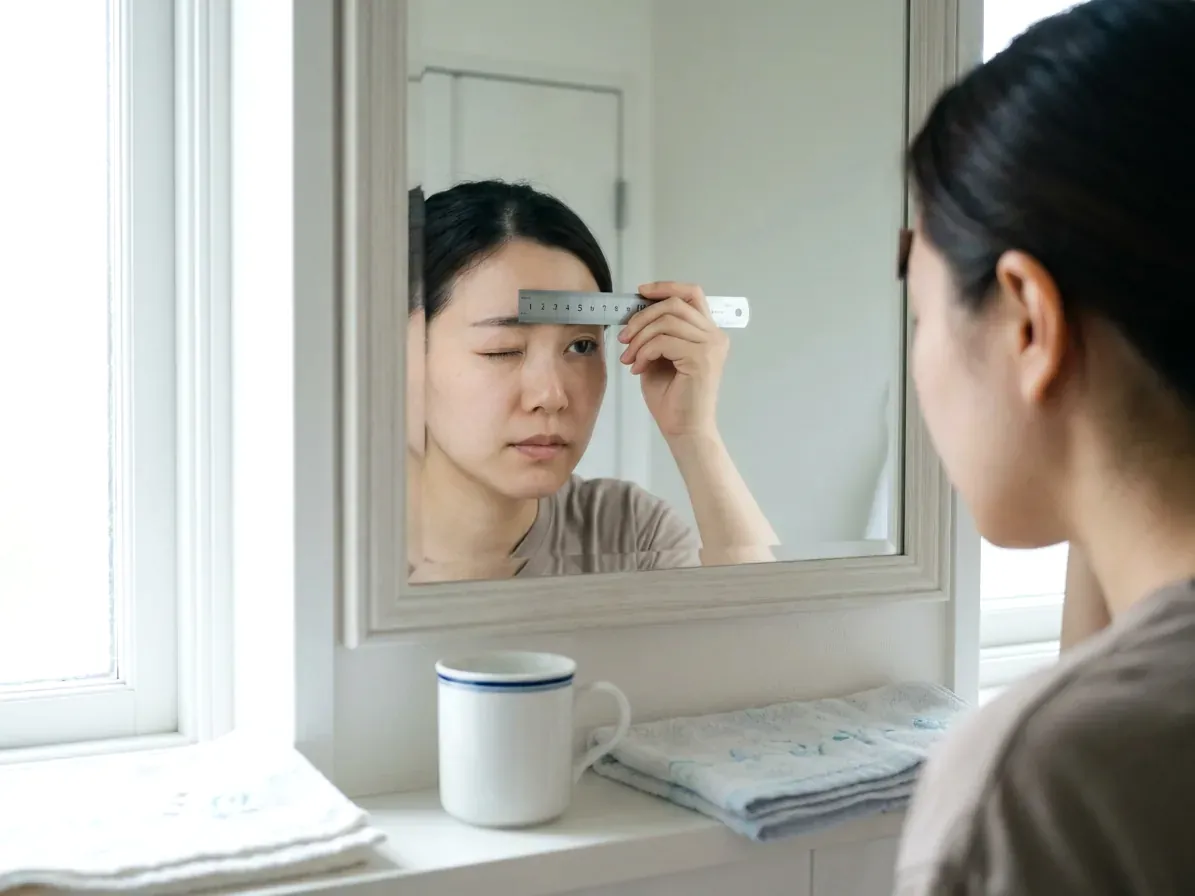
A ruler with mm markings is what you need. Keep the ruler flat on your brow, right above your eyes, and stand about 20 cm from a mirror.
- With your right eye shut, line up the zero so it sits below the centre of your left pupil.
- Now open your right eye and shut your left one.
- Note the mark that sits under the centre of your right pupil. Your PD is that number.
Do not move your head, and keep looking straight ahead the whole time. Cleveland Clinic describes this method. No ruler at hand? Print a PD ruler.
3. Getting Help From a Friend
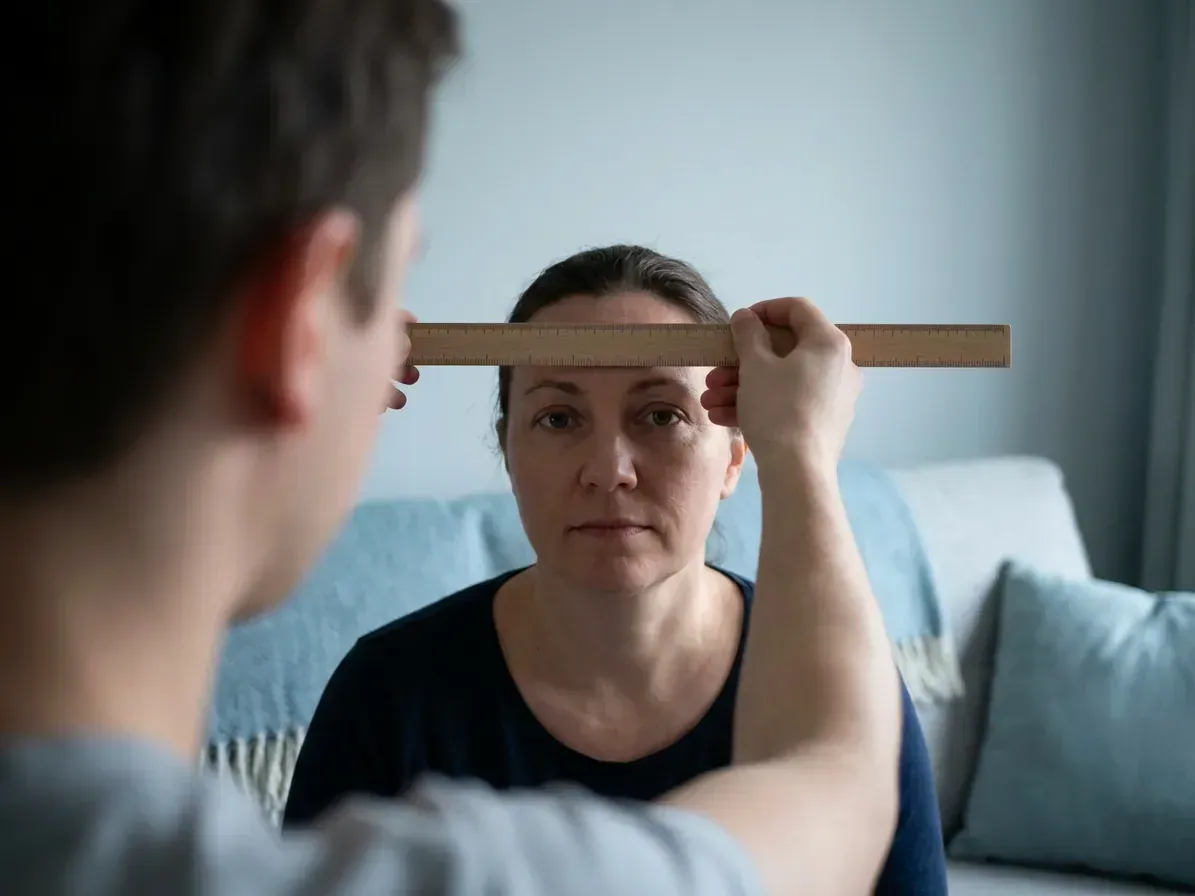
Because you can keep both eyes open, having a helper gives a steadier result. Sit down so the two of you are facing each other at arm's length. Do not focus on the ruler. Instead, fix your gaze on something about 3 m behind your helper.
The helper places the ruler on your brow, lines up zero under one pupil's centre, and reads the mark under the other. To record a dual PD, the helper takes a second set of readings, measuring from the centre of your nose out to each pupil.
4. Measure From Your Old Glasses
When your current glasses feel right, the position of their lenses already matches your PD. Put them on, then in a mirror focus on something far away and use a washable felt pen to dot the lens over each pupil. Take them off, then measure between the two dots.
Single vision lenses work best for this. Remove the marks right away.
5. Using a Photo
A photo works by the same process as the live camera. Hold a card under your nose while another person takes a straight-on photo, and choose "Take or choose a photo" to open it in the measurement. Your browser reads the photo, and it is never sent to a server.
How to Measure PD for a Child
A child's PD is smaller, and it keeps growing through the late teenage years. For age 5 to 7, expect an average PD of about 54 to 56 mm; for age 17 to 19, about 61 to 66 mm (see the table by age). Have the child look at a toy on the far side of the room while you use the friend method.
Ask the eye doctor's office for their recorded measurement, since some shops will not use an adult average for children's glasses.
How Accurate Is a Home Measurement?
Whatever method you use, measure two times. Your method repeats well when two readings come out within 1 mm of each other. The same error can still affect both, as with a card that is tilted. If a result seems wrong, ask an optician to check it. There is less room for error with strong prescriptions and progressive lenses, as wrong PD and tolerance explains. In those cases, the reference is a measurement from an optician.
Questions About Measuring PD
What steps do I follow to measure PD for glasses?
Use a bank card with the camera measurement, or a mm ruler in a mirror. Either one gives the single PD that glasses orders require.
Can you measure PD with a credit card?
Yes. The camera gets a known scale because a credit card measures 85.60 mm wide. For the photo, hold it flat under your nose.
Can I measure PD with my phone?
Yes. The tool on the home page uses your camera and works inside the phone's browser, so you do not need to install anything. Stretch your arm out so the phone sits level with your eyes, and keep a bank card flat right under your nose.
Can I measure PD without a ruler?
Two options exist: the camera method with a card, or a PD ruler you print and check against the card outline on the sheet.
What steps do I follow to measure PD for reading glasses?
First measure your normal PD, then take 3 mm off that number. The near PD calculator will do that for you.
How is PD measured for progressive lenses?
For the frame you pick, you need your PD together with a fitting height. Go to PD for progressive lenses.
Measure your PD nowPrint a PD rulerWhat to enter when you order